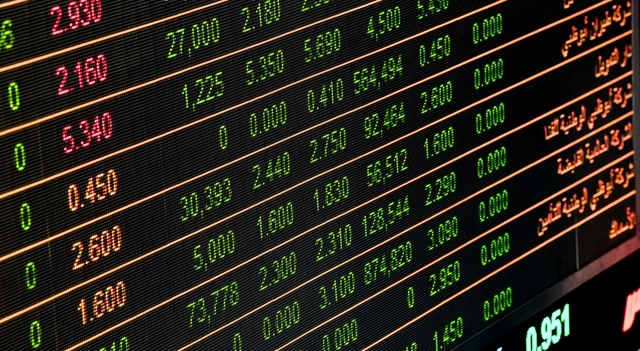
Warning Signs Despite Market Gains
Wall Street continues to post new highs, yet one leading forecaster sees the U.S. economy balanced precariously close to contraction. Moody’s Analytics chief economist Mark Zandi has raised the probability of a recession within the next twelve months to 40 percent, well above the long-term average of roughly 15 percent. His assessment arrives even after stronger-than-expected employment data and continued advances in major indices.
Zandi emphasizes that real disposable income has shown no net growth over the past year once taxes and inflation are accounted for. Without rising purchasing power, lower- and middle-income households are increasingly forced to trade down on everyday purchases. This shift in consumer behavior, he argues, will eventually weigh on broader economic activity even if headline stock prices remain elevated.
The Disconnect Between Markets and Main Street
The stock market, according to Zandi, has rarely been more detached from underlying economic conditions in his three-and-a-half decades as a professional economist. Gains have been concentrated among a handful of large technology and chip companies tied to artificial intelligence spending. Valuations in these segments now sit at levels last seen during the late-1990s internet boom, a period that ended in sharp losses for investors.
Recent modest pullbacks in the S&P 500, Nasdaq, and Dow have done little to alter the overall divergence. Corporate equity performance continues to reflect enthusiasm for AI infrastructure rather than broad-based improvement in household finances or business investment outside that sector.
Key Factors Cited by the Forecaster
- Real disposable income growth at zero percent year over year
- Lower- and middle-income households shifting to lower-cost alternatives
- Stock market leadership limited to hyperscalers and semiconductor firms
- Policy expectations centered on potential intervention by the administration
Stock investors are looking at the president, the president’s looking at the stock market. That doesn’t feel like a stable equilibrium—it’s kind of like a hall of mirrors.
Implications for Investors and Households
Zandi’s remarks underscore that markets and the real economy can diverge for extended periods, yet such gaps have historically narrowed through corrections rather than smooth transitions. Households already adjusting spending patterns may face further pressure if income growth remains flat or turns negative. Meanwhile, equity investors appear to be pricing in the possibility of policy adjustments should market momentum falter.
The overall picture presented is one of caution rather than outright alarm. A 40 percent recession probability does not guarantee contraction, but it does indicate conditions far more fragile than recent stock-market headlines suggest. Observers will be watching upcoming data on income, spending, and corporate earnings for clearer signals of whether the current equilibrium can hold.