Table of Contents
- What Is Seigniorage?
- Key Takeaways
- Understanding Seigniorage
- Real-World Example of Seigniorage
- Special Considerations
- Seigniorage and Gresham's Law
- Does Seigniorage Cause Inflation?
- Does Inflation Impact Seigniorage?
- What Are the Origins of Seigniorage?
- What Is the Seigniorage of $1?
- How Many Coins Does the U.S. Mint Produce?
- Can Cryptocurrencies Generate Seigniorage?
- Can Seigniorage Lead to Hyperinflation?
- The Bottom Line
What Is Seigniorage?
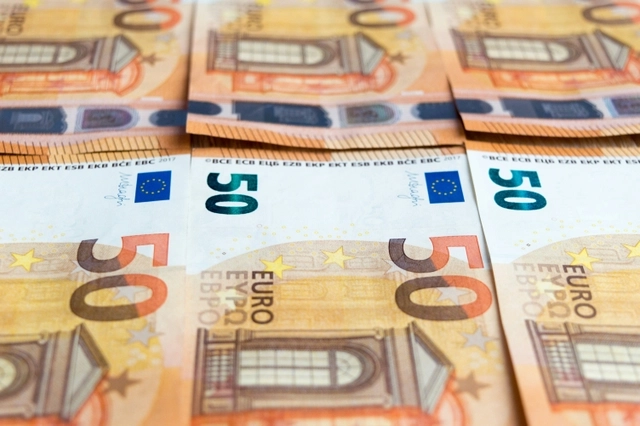
Let me explain seigniorage directly: it's the difference between the face value of money, like a $10 bill or a quarter, and what it costs to produce it. If that difference is positive, the government profits; if negative, it's a loss. You need to understand this as a key way governments can generate revenue without raising taxes.
Key Takeaways
Seigniorage boils down to the gap between money's face value—whether bills or coins—and production costs. When the money created is worth more than it costs, it counts as positive revenue for the government. But in some cases, producing currency leads to a loss rather than a gain.
Understanding Seigniorage
Seigniorage becomes revenue when the money a government creates exceeds its production costs. Governments use this to cover expenses without taxing you more. For instance, if the U.S. government spends five cents to make a dollar, the seigniorage is 95 cents. This gives countries a chance to profit from minting money.
While we often define seigniorage as the difference between printing costs and face value, it also means the goods or services a government can buy by printing new notes.
Sometimes, though, currency production causes a loss. This happens more with coins because the metal has its own value, called melt value, which might exceed the coin's denomination or, with production costs, create a net loss. Take the U.S. penny: in 2023, it cost 3.07 cents to produce a one-cent coin, marking the eighteenth straight year of losses.
Melt values can shift over time with market changes, potentially making the metal worth more than the coin's face value. Silver coins like the U.S. silver quarter and dime are classic examples.
Real-World Example of Seigniorage
Here's how it works in practice: The Federal Reserve orders new currency from the Treasury's Bureau of Engraving and Printing based on demand, paying the production costs. They detail costs per denomination—in 2023, a $20 bill cost 5.3 cents, and a $100 bill cost 8.6 cents.
For coins, the U.S. Mint handles production based on Federal Reserve Bank orders, and the Fed buys them at face value. In 2024, the Fed's currency operating budget hit $1.104 trillion.
Special Considerations
The core idea of seigniorage suggests profit from producing bills cheaper than their face value, but other factors complicate it. If the Federal Reserve boosts dollars in the economy, it buys a Treasury bill to allow more production.
Even if production costs are low, remember that Treasury bills involve interest payments to the Fed on top of the initial investment.
Seigniorage and Gresham's Law
Gresham's law states that bad money drives out good. It started with coin compositions and precious metal values—if a gold coin is worth $5 and a silver one $0.50, people hoard gold and spend silver, pushing gold out of circulation.
This acts like seigniorage because the gold's value rises despite its face value matching 10 silver coins. Since we left metallic standards, this applies to currency stability in global markets.
Does Seigniorage Cause Inflation?
Seigniorage doesn't automatically cause inflation, but it can add to inflationary pressures in specific cases. When governments print money, they expand the supply—if this outstrips economic growth, prices rise, per the quantity theory of money.
The effect depends on usage: productive investments might avoid inflation, but funding consumption often leads to it. Central banks monitor this and use tools like interest rates to counter effects.
Does Inflation Impact Seigniorage?
Moderate inflation can boost seigniorage by increasing money demand, letting governments issue more currency. It also reduces real debt burdens indirectly.
But high inflation complicates things—people switch to foreign currencies, cutting domestic demand and thus seigniorage revenue.
What Are the Origins of Seigniorage?
The term comes from feudal Europe, where seigneurs or lords had the right to mint coins.
What Is the Seigniorage of $1?
In 2023, producing a U.S. dollar cost 2.8 cents, so the seigniorage is 97.2 cents.
How Many Coins Does the U.S. Mint Produce?
In 2023, the U.S. Mint made over 13.1 billion circulating coins for everyday use, plus commemorative and precious metal ones.
Can Cryptocurrencies Generate Seigniorage?
Yes, cryptocurrencies like Bitcoin create a form of seigniorage—in proof-of-work systems, miners get new coins for validating transactions.
Can Seigniorage Lead to Hyperinflation?
Excessive seigniorage doesn't directly cause hyperinflation, but over-relying on it for funding deficits can, by rapidly devaluing money and spiking prices.
The Bottom Line
Seigniorage lets governments profit when currency's face value beats production costs, funding spending without taxes. Sometimes it results in losses, but it's a fundamental monetary tool you should grasp.