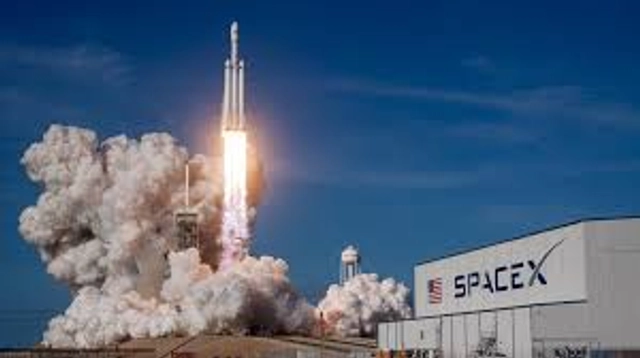
Third Stacking in South Texas
For the third time in three years, SpaceX has stacked a new version of its enormous Starship rocket on a launch pad in South Texas, just a few miles north of the US-Mexico border. The newest-generation Starship, known as Starship Version 3, is taller and more powerful than the ones that came before it. This stacking marks another milestone in the ongoing development at the Boca Chica site, where SpaceX continues to push the boundaries of reusable rocket technology.
Key Upgrades Across the Stack
The upgrades on Starship are numerous. Perhaps the most notable changes are higher-thrust, more efficient Raptor engines on the Super Heavy booster and Starship upper stage, a new reusable lattice-like structure at the top of the booster for hot staging, and three—not four—modified grid fins to help bring the first stage back to Earth for recovery and reuse. These modifications aim to improve performance, reliability, and reusability, addressing lessons learned from previous flights. The Super Heavy booster now carries more propellant capacity, and the upper stage has stretched tank sections to accommodate additional fuel, all contributing to greater payload capabilities.
Toward In-Orbit Refueling and Beyond
If all goes according to plan, this is the version of Starship that SpaceX will use to begin experimenting with in-orbit refueling, a capability engineers must master before sending ships anywhere farther than low-Earth orbit. In the near-term, refueling will enable Starships to fly to the Moon to serve as landers for NASA's Artemis program. Starship remains an iterative development program, and new versions are in the pipeline, but Starship V3 should mark a step toward SpaceX actually using Starships in space, rather than solely proving they can get there and get home. Recent fueling tests have set the stage for the first launch of this configuration, building confidence in the propellant systems.