The Supreme Court Ruling
The Supreme Court on Friday issued a 6-3 ruling striking down a significant portion of the Trump administration's tariffs, determining they were imposed illegally under the International Emergency Economic Powers Act (IEEPA). Chief Justice John Roberts authored the majority opinion, which held that the law does not authorize the President to impose tariffs. The cases, Learning Resources Inc. v. Trump and Trump v. V.O.S. Selections, were brought by an educational toy manufacturer and a family-owned wine and spirits importer.
The decision did not address tariff refunds, focusing solely on the legality of the tariffs themselves. This leaves open questions about how the government will handle repayments to affected importers.
The issue of distributing tariff refunds was described during oral arguments as likely to be a 'mess'.
Refund Implications and Litigation Paths
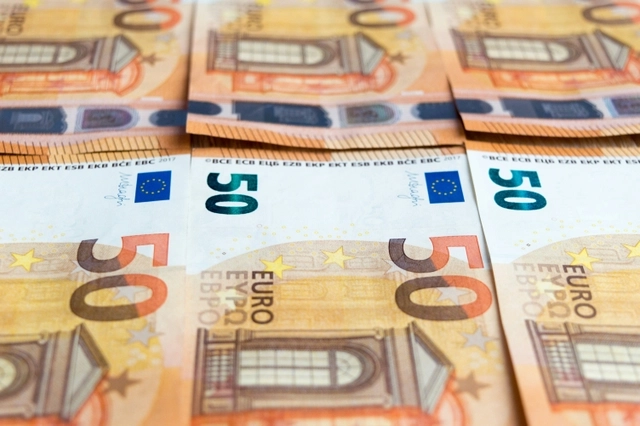
The United States may now face demands for billions in refunds from importers who paid the IEEPA tariffs, despite some having passed costs to consumers. The Court explicitly stated nothing about whether or how the government should return the collected funds, which could strain the U.S. Treasury.
Importers can pursue refunds through litigation in the U.S. Court of International Trade or by filing protests with Customs and Border Protection within 180 days of goods liquidation. More than 1,000 lawsuits have already been filed in anticipation of this ruling. Nonpartisan analyses estimate refunds could reach $175 billion per Penn-Wharton Budget Model and over $160 billion through early 2026 per Tax Foundation, erasing much of the tariff revenue gains.
Key Refund Estimates
- Penn-Wharton Budget Model: Up to $175 billion in total refunds.
- Tax Foundation: More than $160 billion illegally collected under IEEPA.
- JPMorgan: Around $150-200 billion at stake, with varying economic impacts depending on pass-through to consumers.
Administration and Expert Reactions
President Trump called the ruling 'deeply disappointing' and criticized the Court for lacking courage and avoiding the refund issue, predicting further litigation. Treasury Secretary Scott Bessent downplayed refund concerns as a 'corporate boondoggle,' noting the process could take weeks, months, or over a year, while outlining plans for replacement tariffs under Sections 122, 232, and 301 to sustain revenue.
Experts like Tim Brightbill of Wiley emphasized the need for a clear refund process amid hundreds of billions at stake. David McGarry of Taxpayers Protection Alliance urged minimal-cost handling for small businesses, while Scott Lincicome of Cato Institute highlighted burdens on smaller importers. Joseph Maher and others anticipate ongoing Court of International Trade battles to define remedies.
I guess it has to get litigated for the next two years. So they write this terrible defective decision, totally defective. It's almost like not written by smart people. And what do they do, they don't even talk about that.
It won't be a problem if we have to do it, but I can tell you that if it happens – which I don't think it's going to – it's just a corporate boondoggle.