Differing Views on a Relaxed Weekend
Nick Sadler viewed weekends as open territory for rest and recovery without rigid plans, while his wife saw available time as an opportunity to schedule social activities. This mismatch led to friction when she added a short hangout to their calendar without prior discussion. Sadler interpreted the move as disregard for his need for unstructured downtime.
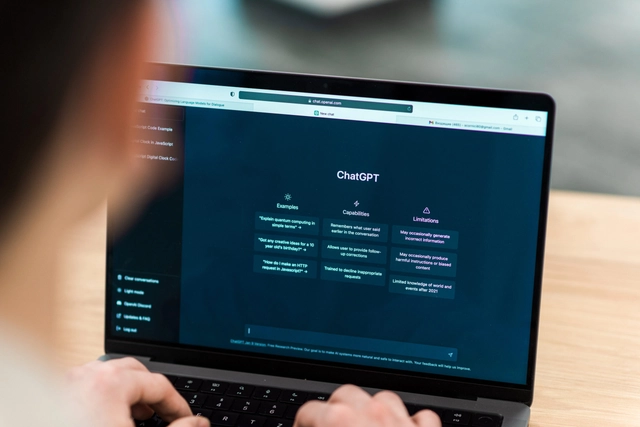
Rather than continuing the back-and-forth, Sadler turned to ChatGPT's group chat feature to bring in an external voice. He instructed the model to serve as a neutral party and outline concrete next steps for both partners. The chatbot responded by highlighting that each person had acted logically from their own standpoint, framing the issue as one of classification rather than respect.
Practical Suggestions from the Model
ChatGPT offered straightforward recommendations such as asking whether an idea was merely a suggestion or a firm commitment before adding it to shared plans. Sadler described the output as similar to advice from a trusted friend who pointed out alternative perspectives and phrasing options. The couple received actionable language to try in future conversations, though they still had to implement the changes themselves.
Sadler, a 48-year-old film producer and self-described AI enthusiast, had already experimented with the tool in his marriage. He used it to examine weaknesses in his own reasoning and to draft messages of apology. To avoid detection, he deliberately inserted small errors so his wife would not assume the words came straight from the model.
It was like, ‘Well, next time just consider this’ and ‘maybe try saying this’ and ‘maybe try doing that.’ We got some sort of advice to follow, but ultimately we’ve still got to do the work and we’ve still got to actually take the actions.
Parenting Pressures and Reduced Reliance on Professionals
Raising two young children created recurring points of tension that occasionally escalated into minor arguments. The couple had considered traditional counseling but found that ChatGPT could walk them through difficult exchanges in real time. One evening Sadler opened the application on the couch and invited his wife to address the model as though it were a therapist, describing the experience as having professional support immediately available.
This pattern reflects a broader trend in which individuals invite large language models into emotionally charged personal matters. The models deliver confident, structured responses even when underlying assumptions remain unexamined. Research indicates that AI mediation can reduce perceived division between parties, yet the systems lack the capacity to interpret body language, cultural context, or the accumulated history of a relationship.
Therapist Perspectives on AI Summaries
Therapist Courtney Quattrini has observed clients arriving at sessions with AI-generated summaries of arguments written from one partner's viewpoint. These summaries are often presented as objective records, though they inevitably reflect the input provided. The core work of couples therapy involves recognizing that two conflicting accounts can coexist and that each partner's emotional reality matters.
When one person feeds an AI only their own narrative, the output tends to reinforce existing positions rather than reveal alternative approaches. In contrast, when both partners contribute to the same conversation, the model draws from a wider set of statements and can surface points of overlap. Software engineer Khalid Tawohid developed an application called Bridge that allows two separate AI instances, each trained on one partner's chat history, to facilitate discussion while maintaining distinct perspectives.
The answer is typically not that you need some type of content strategy on how you should approach your next steps. But it’s much more that you need emotional support, which comes from asking other people that you care about what you should do in the situation, not asking a machine.
Limits of Machine Mediation
Tawohid remains cautious about widespread adoption of his own tool, noting that it functions as a combination of journal, therapist, and friend yet remains computer code. After months of use, he and his partner found they needed the AI less often because the structured exchanges had improved their direct communication. Sadler reported a similar outcome, stating that ChatGPT had taught him to ask clarifying questions instead of assuming intent.
Harvard fellow Amelia Miller observes that chatbots can serve as useful prompts for self-reflection when users lack habits of introspection. However, the language generated may diverge sharply from what a partner would realistically accept, rendering the suggestions counterproductive. Podcast consultant Josh Elledge recounted an instance in which his wife used AI to prepare remarks about his appearance; the resulting statements intensified rather than resolved the disagreement until both parties separated the model's phrasing from her actual views.
Maintaining Human Oversight
Therapists emphasize that models have no nervous system and therefore cannot detect shifts in tone or nonverbal cues that signal when a conversation should pause or change direction. Endless loops of AI-assisted rumination risk substituting machine validation for genuine interpersonal work. Miller recommends custom prompts limited to roughly ten exchanges that focus on surfacing personal biases rather than producing polished scripts.
Ultimately the appeal of an always-available, authoritative voice during conflict is understandable, yet the resolution of relational difficulties continues to rest on direct human exchange. The satisfaction of navigating challenges together, even imperfectly, remains tied to the presence of another person rather than an algorithm.